

Three ways in. All finish with a plan.

Undecided, already skilled, or set on one job. Pick the door that matches where you actually are today, not where a career guide says you should be.

An instructor guiding a student through a welding exercise in a training shop
A machinist operating a CNC machine control panel
A young technician in a hard hat checking equipment

Build your path

Three doors. One finish line.

Someone with no idea what they want, someone holding skills they've never valued, and someone set on one job need three different searches. All three end at a named DFW employer with a real opening.

A young technician smiling on the plant floor

01Help me decide

I don't know what I want yet

The most common place to start. You don't need a plan to begin.

  1. Answer a few questions about the work you'd rather do
  2. See two or three jobs that fit, with DFW pay
  3. See the skill path for each, and how long it takes
  4. Pick one and carry it into the job search

An experienced technician inspecting equipment overhead

02Match my skills

What are my skills already worth?

For anyone mid-program, holding an unused credential, or carrying years of work nobody has mapped to a job title.

  1. Upload a resume or enter the credential you hold
  2. See your match score against real DFW openings
  3. See the jobs you already qualify for
  4. See the jobs one short course away
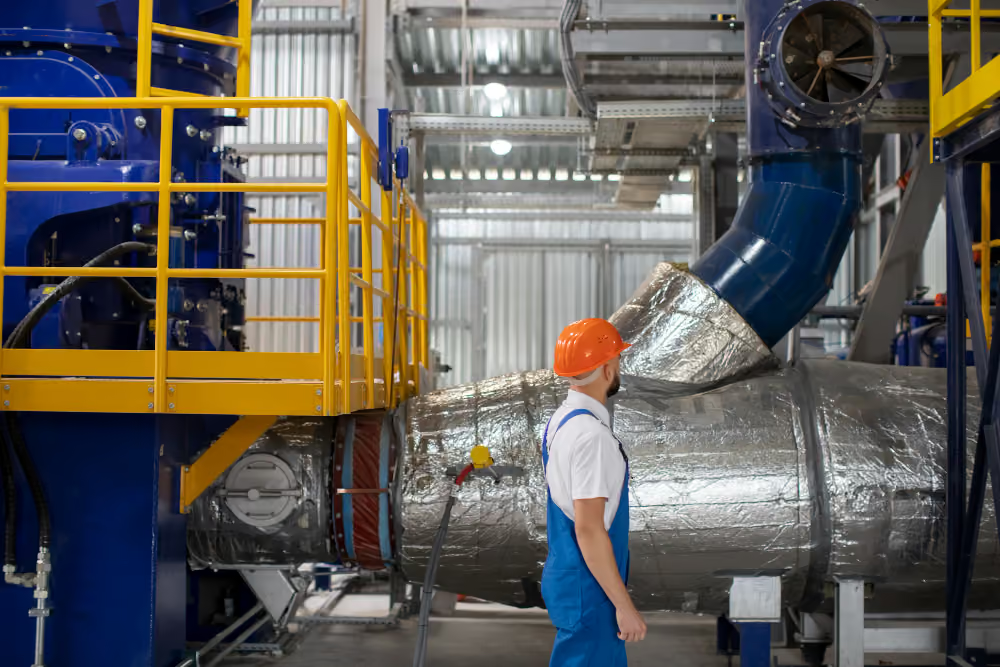
A technician working on production equipment in a clean plant

03Job first

I know the job I want

You've seen the job and the pay. Now see what stands between you and it.

  1. Pick the target job (most people start with maintenance)
  2. See the skills gap against what you already have
  3. See where to get them, and how long each option takes
  4. See possible funding and the employers who hire for that job

Skills by job

What these four jobs actually ask you to know.

Knowledge areas and tooling come from O*NET, the federal occupational database. Wages are Dallas-Fort Worth medians from the federal wage survey. Nothing here is our opinion.

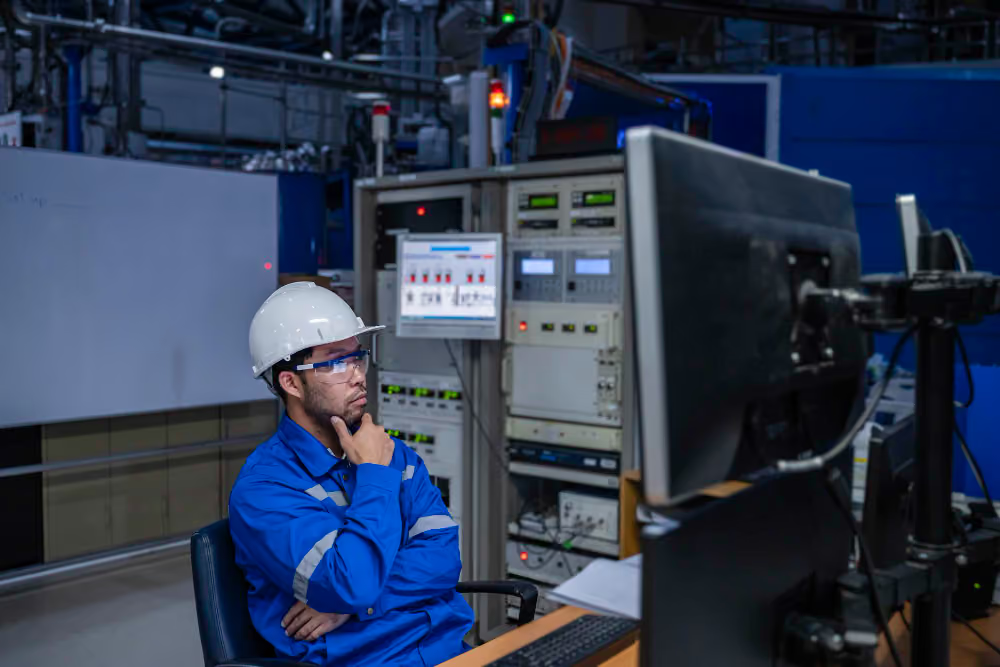
A maintenance technician checking readings at a plant workstation

SOC 49-9041

Maintenance technician

$63,380DFW median · 12,730 employed in DFW

Typical entry: technical college certificate or diploma. Texas projects 6,380 openings a year statewide in this job.

Knowledge

  • Mechanical
  • Production & processing
  • Engineering & technology
  • Design

Tools

Maintenance planning software, Machine tool suites, SAP

Industrial machinery mechanics

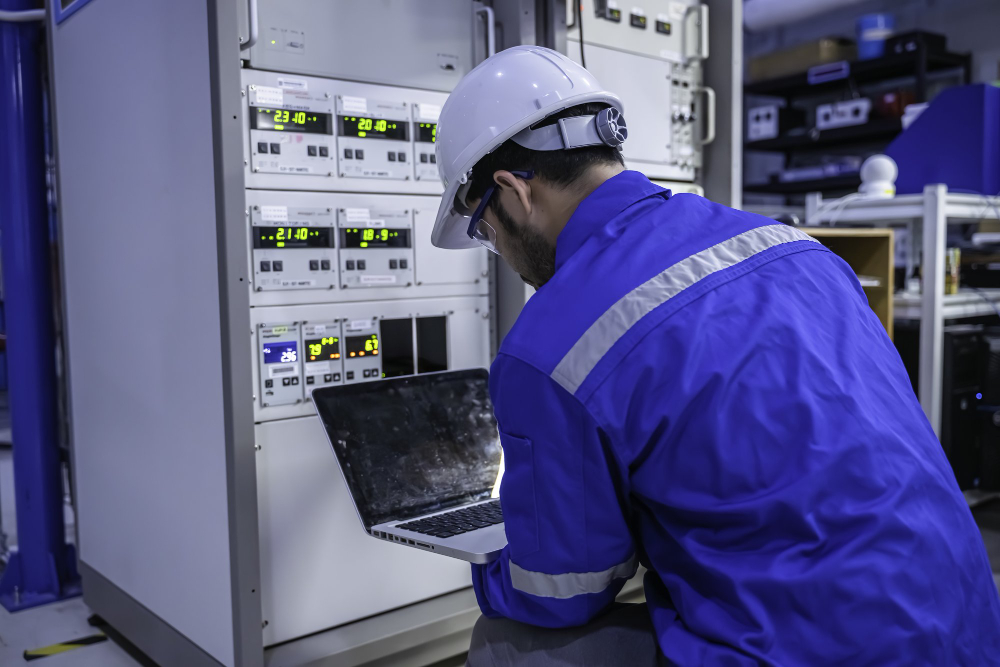
An instrumentation technician working at an automation test rig with a tablet

SOC 17-3023

Instrumentation technician

$75,580DFW median

Typical entry: certificate into the maintenance job, then add the degree while working. Top 10% in DFW: $103,880.

Knowledge

  • Engineering & technology
  • Computers & electronics
  • Design
  • Mechanical

Tools

LabVIEW, AutoCAD, MATLAB, Excel

Electrical & electronic engineering technicians

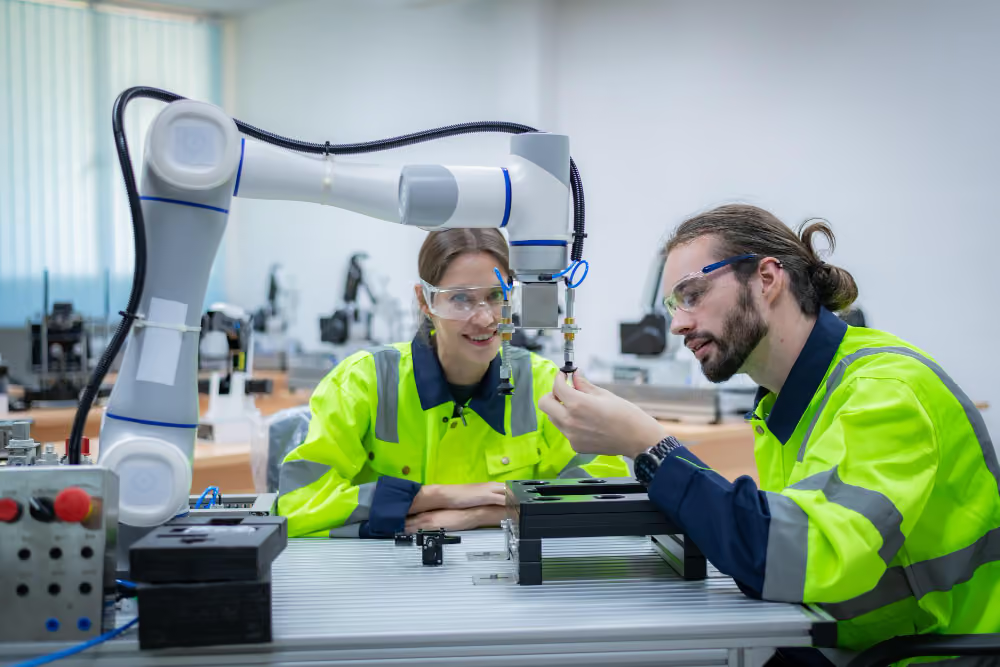
Two people reviewing work beside an industrial robot arm

SOC 17-3024

Mechatronics technician

$52,160DFW median

Smallest of the four: about 110 openings a year across Texas. The top 10% in DFW earn $93,340. Worth aiming at, not waiting for.

Knowledge

  • Computers & electronics
  • Mechanical
  • Engineering & technology
  • Mathematics

Tools

MATLAB, Simulink, PLC and robotics platforms

Electro-mechanical & mechatronics technicians

A machinist working the control panel of a CNC machine

SOC 51-4041

Machinist

$59,830DFW median

Skills transfer: CNC programming pays a DFW median of $71,060, more than maintenance, from a machining start.

Knowledge

  • Mathematics
  • Mechanical
  • Production & processing
  • Design

Tools

G-code, Mastercam, SolidWorks, AutoCAD

Machinists

Find a program

Programs that teach it, by the job you want.

Pick a job to see the route in and what to look for. Then choose the format that fits your time: a technical college semester or a self-paced online course.

Route to

Maintenance technician

$63,380DFW median

Technical college certificate or diploma in industrial maintenance.

Look for

Industrial maintenance programs

An instructor teaching a class of adult students

Technical college

Semester-based and hands-on. The route most employers recognize on sight. In DFW, that includes Texas State Technical College (TSTC) in Red Oak.

Delivered by DFW's community and technical colleges

A technician working at a machine in a workshop

Self-paced online

Start the same day, no semester to wait for. Best for closing one specific gap. Priced per course.

Delivered by Unmudl, the marketplace's learning platform

Route to

Instrumentation technician

$75,580DFW median

Start with a certificate into the maintenance job, then add the degree while working.

Look for

Electronics or instrumentation programs

An instructor teaching a class of adult students

Technical college

Semester-based and hands-on. The route most employers recognize on sight. In DFW, that includes Texas State Technical College (TSTC) in Red Oak.

Delivered by DFW's community and technical colleges

A technician working at a machine in a workshop

Self-paced online

Start the same day, no semester to wait for. Best for closing one specific gap. Priced per course.

Delivered by Unmudl, the marketplace's learning platform

Route to

Mechatronics technician

$52,160DFW median

The smallest of the four: about 110 openings a year across Texas. Top earners in DFW reach $93,340.

Look for

Mechatronics or electro-mechanical programs

An instructor teaching a class of adult students

Technical college

Semester-based and hands-on. The route most employers recognize on sight. In DFW, that includes Texas State Technical College (TSTC) in Red Oak.

Delivered by DFW's community and technical colleges

A technician working at a machine in a workshop

Self-paced online

Start the same day, no semester to wait for. Best for closing one specific gap. Priced per course.

Delivered by Unmudl, the marketplace's learning platform

Route to

Machinist

$59,830DFW median

Skills transfer: CNC programming pays a DFW median of $71,060.

Look for

Machining and CNC programs

An instructor teaching a class of adult students

Technical college

Semester-based and hands-on. The route most employers recognize on sight. In DFW, that includes Texas State Technical College (TSTC) in Red Oak.

Delivered by DFW's community and technical colleges

A technician working at a machine in a workshop

Self-paced online

Start the same day, no semester to wait for. Best for closing one specific gap. Priced per course.

Delivered by Unmudl, the marketplace's learning platform

Where you can get it

The schools that actually teach this, and where they are.

Community and technical colleges in Dallas-Fort Worth with technician or technician-adjacent training.

High school students building a robot together

Community & technical colleges

Search DFW's community and technical colleges by name, city, county, ZIP, or metro area. Each listing carries its programs, its location, and whether it's a partner or network college.

See TSTC North Texas programs →

What counts as a technician, and what counts as adjacent. We use the national definition, not our own: "A technician is a skilled worker who helps turn technology, infrastructure, and equipment into operating capacity. Technicians install, operate, maintain, troubleshoot, repair, test, calibrate, and improve the systems modern industry depends on."

Technician-adjacent means a job that works closely alongside technicians without being one: technical sales, project management, a service advisor, a parts specialist. You don't turn the wrench, but the job falls apart if you don't understand the people who do. Those programs are listed too, and labeled.

Source: National Reference Guide for Technician Careers

Learner success

Starting is easy. Finishing is what we're here for.

The hard part of training is rarely the material. It's the login that won't work, the week that got away, the question with nobody to ask. That's the part we handle, so the plan you start with is the plan you finish.

Before you start

  • Pick the right program. Someone walks through your options with you and matches courses to the job you're after.
  • Get in without the runaround. Registration, account setup and course access, handled with you, so day one is learning, not troubleshooting.

While you're in it

  • One person, by name. A direct contact for every question, start to finish. No ticket queue.
  • A plan that fits your life. A success coach helps you build a realistic schedule around work and family.
  • If you go quiet, we notice. Haven't started? Stalled out? We reach out before you fall behind.
  • Stuck on something technical? Course access, LMS issues, assessments: fixed fast, so a glitch never costs you a week.

When you finish

  • Proof you can show. We track your completion and help you get your certificate and document the skills you've earned.
  • Know what it's worth. We connect your new skills to your current job, the next rung up, and the pathways beyond it.

If your employer is sponsoring your training, they see your enrollment, progress and completion. That's not a report card. It's how the support you need gets noticed and lined up.

A smiling technician holding a tool in a workshop

Straight answers

We show you the before and after. Including when it isn't enough.

Any time a course is recommended against a job, you see what it does to your match score, as a number, before you spend a dollar or an evening.

Match today70%
After this course96%

Illustrative example, not live data.

And the part nobody else writes down: a higher match score means you fit the job better on paper. It does not guarantee an interview, and it does not guarantee a hire. If a course would move you from 70% to 74%, we'll say that too, and you decide if it's worth it.

Potential funding

Money that might cover this. Emphasis on might.

Eligibility varies by program, income, residency, and college. We list what exists and link you to the rules. We don't tell you you've got it.

Varies by income and enrollment

Federal and state aid

Grants and aid you may qualify for. Start with the federal application; the college's financial aid office does the rest.

Varies by employer

Employer-sponsored training

Some DFW manufacturers pay for training, or reimburse it once you're hired. Worth asking about at an open house before you pay for anything yourself.

Varies by employer and program

Apprenticeships and work-based learning

The version where you earn while you learn, instead of paying to learn and then looking. Fewer seats, and worth the paperwork when you get one.

Scholarships

Named scholarships and grant-funded seats are listed as DFW partners confirm them. We only list funding that actually exists, and we link you straight to its rules.

An experienced technician operating plant equipment

For companies and philanthropies

The page that shows where money comes from should show where it goes.

Companies and philanthropies can establish a Future Technician Fund™: a branded scholarship fund that helps people gain skills, finish technician training, and move into technician jobs, aimed at the jobs and regions they actually hire for. Amazon created the first one to grow the next generation of its RME technicians.

One evening of reading beats another year of wondering.

Start from the job or start from the credential. Either way you'll know more in ten minutes than most people figure out in a year.

A veteran technician in work coveralls